Megan Kang is an assistant professor at Johns Hopkins School of Government and Policy. Her research aims to make sense of violence, gun availability, and criminal governance through ethnography and mixed methods.
email me
curriculum vitae

About
Megan Kang is a sociologist who studies violence and crime and how they shape everyday life. Her work treats violence not only as a behavior but as a form of interaction and identity that emerges under conditions of uncertainty, and asks how people come to leave it behind. Her current book project, grounded in longitudinal ethnographic fieldwork on Chicago's West Side, shows how young men become known as "shooters" and how that reputation constrains their paths out of violence. She traces how gang fragmentation and firearm availability sustain these dynamics, and how reputational concerns shape both entry into criminal groups and exits from them. Related work examines the social cognition of violence and criminal governance in Chicago.
A mixed-methods scholar, Kang pairs ethnography and in-depth interviews with statistical analysis of survey and administrative data to examine the drivers of inequality in safety from multiple vantage points. She is also developing approaches for using large language models in qualitative research. Her work appears in Proceedings of the National Academy of Sciences, Criminology, American Journal of Preventive Medicine, Epidemiology, and Journal of Marriage and Family. She is committed to public sociology by co-producing knowledge with community and civic partners, writing op-eds and policy briefs, and maintaining a publicly available dataset on household gun ownership.
Kang is an assistant professor at the Johns Hopkins School of Government and Policy and an affiliate of the University of Chicago Crime Lab. She earned her Ph.D. in sociology from Princeton University, her M.P.P. from the University of Chicago Harris School of Public Policy, and her B.A. in history and political science from UC Berkeley.
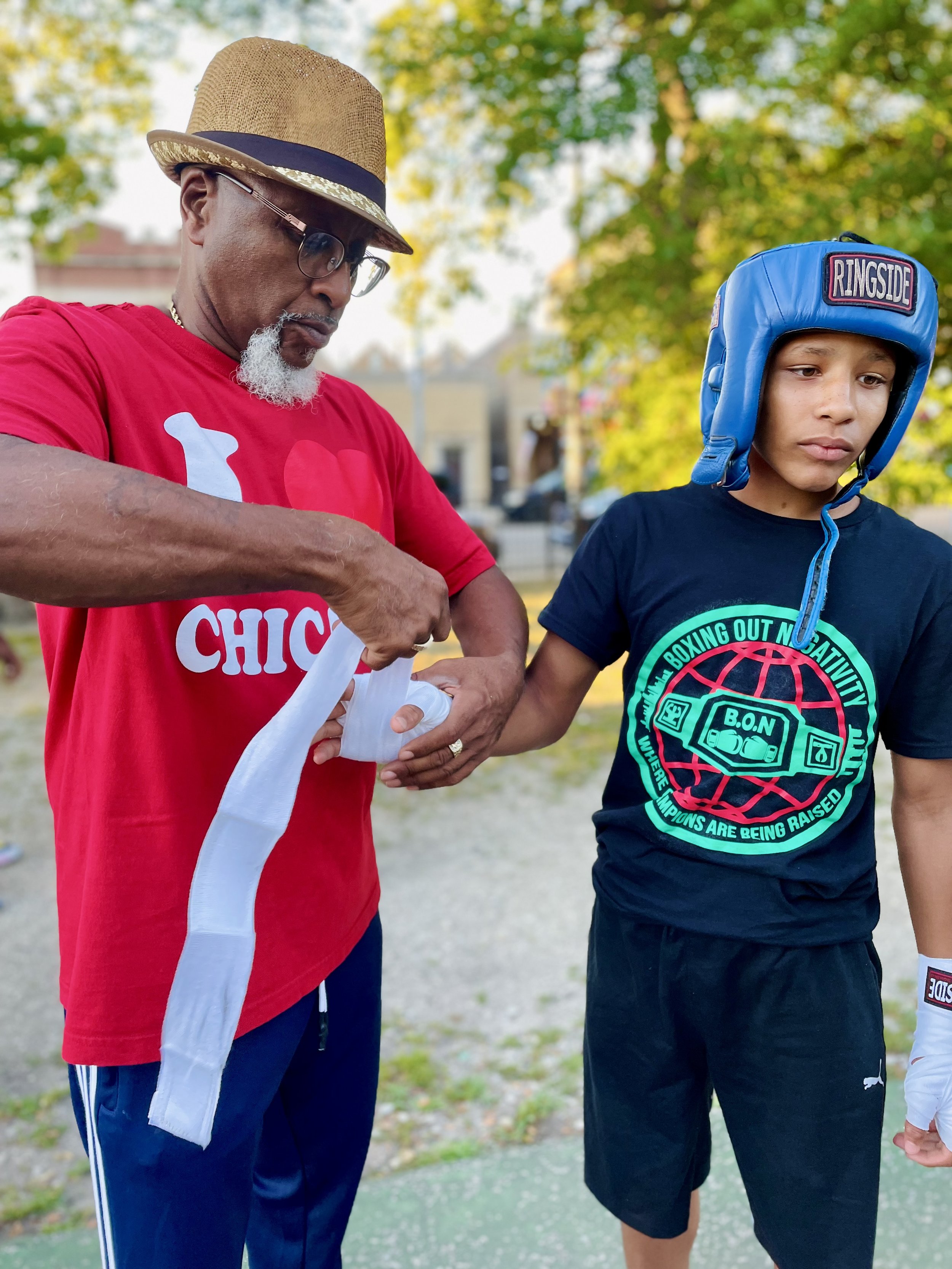
Photo: Charles and Jalen from Boxing Out Negativity, Chicago, 2022

EDUCATION
Princeton University, Ph.D.
UChicago Harris School of Public Policy, M.P.P.
University of California, Berkeley, B.A.
AFFILIATIONS
Research Affiliate, University of Chicago Crime Lab
Research
PUBLICATIONS [google scholar]
Social Cognition and Interpersonal Violence , Proceedings of the National Academy of Sciences, 2026 (with Kathryn Edin, Jens Ludwig, Sendhil Mullainathan, and Timothy Nelson) [Covered in Aeon, Chicago Tribune, Stanford Social Innovation Review, PNAS Editorial]
Weaker the Gang, Harder the Exit, Criminology, 2025
Other adults in the United States: Improving survey measures of youths' non-parental adult relationships, Journal of Marriage and Family, 2025 (with Rachel Brown-Weinstock, Kathryn Edin, Sarah Pachman, and Kaitlyn Bolin)
The Era of Progress on Gun Mortality: State Gun Regulations and Gun Deaths from 1991- 2016, Epidemiology, 2023 (with Patrick Sharkey) [Covered in NYTimes, Washington Post]
Balancing Empirical Trade-offs When Evaluating U.S. Gun Policy, Epidemiology, 2023 (with Patrick Sharkey)
Extending the Firearm Suicide Proxy for Household Gun Ownership, American Journal of Preventive Medicine, 2023 (with Elizabeth Rasich) [access dataset here] [Covered in Aeon, Vital City, The Trace]
State-Level Household Gun Ownership Proxy Dataset, 1949-2020, Data in Brief, 2023 (with Elizabeth Rasich)
Intervention of Choice: Behavioral Science and Gun Violence, Quinnipiac Law Review, 2021 (with Jens Ludwig and Elizabeth Rasich)
WORKING PAPERS
How the Truly Disadvantaged Endure: Trauma and Daily Functioning (with Kathryn Edin, Jens Ludwig, Sendhil Mullainathan, and Timothy Nelson)
Generativity as a Pathway to Desistance (with Bethany Elston, Gianni Pacheco, and Kathryn Edin)
DATASETS
Firearm Suicide Proxy for Household Gun Ownership, 1949-2020, https://doi.org/10.7910/DVN/QVYDUD, Harvard Dataverse
Current work
-
Outstanding Graduate Student Paper Award, Decision-Making, Social Networks, and Society Section, American Sociological Association, 2025; Robert F Dentler Student Award, Sociological Practice and Public Sociology Section, American Sociological Association, 2025
Sociologists have extensively studied violence but paid less attention to how firearms shape the identities and life trajectories of those who carry them. Drawing on ethnographic fieldwork and life-course interviews in Chicago, I examine how individuals develop reputations as shooters and the obstacles they face in shedding this label. The erosion of gang control over gun markets, coupled with the status attached to being a shooter, heightens pressures to cultivate violent reputations. Youth move from acquiring a gun to becoming a shooter through rituals and public displays that transform gun carrying into a social identity. Three mechanisms make shooter identities particularly durable: the lethality of firearms creates lasting rival networks; social media preserves shooter reputations through permanent digital archives; and widespread firearm availability creates a security dilemma where former shooters cannot safely disarm while rivals remain armed. For former shooters, conventional turning points like school, romantic relationships, and work become sites of vulnerability rather than transformation. This study reveals how guns function as social forces that make exit from violence increasingly difficult even after behavioral change occurs.
-
Co-authored with Chris Blattman
This project documents the organizational structure, economic operations, and governance systems of Chicago's major street gang nations during their peak corporatization from the 1980s through the mid-2000s. Drawing on semi-structured interviews with former affiliates and community stakeholders, federal RICO court records, and historical archives, the study investigates how these organizations built hierarchies, managed drug markets, coordinated across sets, resolved internal conflicts, and established parallel institutions that displaced civic life in affected neighborhoods. The research addresses a critical gap in the empirical record: the era between the early nation-building period documented through the 1970s and today's fragmented crews remains largely unsystematized, and the generation with firsthand knowledge is aging out of reach. By combining organizational economics, urban sociology, and political economy frameworks, the project aims to produce the first broad, comparative account of how multiple gang nations actually functioned as confederations to resolve coordination problems endemic to organized crime and informal drug economies.
-
Co-authored with Kathryn Edin and Jens Ludwig
Most Americans believe that poverty is caused by individual failure. Americans, more so than Europeans, think that how someone’s life turns out is a function of their own attitudes and behaviors. In this study we re-examine this perspective drawing on interviews with 99 current and past participants of Chicago’s Rapid Employment and Development Initiative (READI), a behaviorally informed violence prevention program, and six months of observation at READI sites. These data illustrate the impact on subjects of what appears to be a key barrier to their economic self-sufficiency – trauma – as well as the long shadow trauma plays in shaping every aspect of daily life. The results suggest the hypothesis that common interpretations of poverty as a downstream consequence of poor life choices ignore the role of trauma. Ending poverty in America may not be possible without researchers and policymakers paying greater attention to this underappreciated source of disadvantage.
-
Co-authored with Bethany Elston, Kathryn Edin and Gianni Pacheco
Violence spreads through social networks, but it also erodes those networks in the process. For men in Chicago’s highest-violence neighborhoods, participation in and exposure to gun violence destroys trust, severs friendships, and produces paranoia and isolation, leaving them without the social support that desistance theories treat as preconditions for change. How, then, do these men desist when the violence they are trying to leave has damaged the very relationships that desistance from crime requires? Drawing on 99 interviews with men enrolled in a community violence intervention called READI Chicago, we argue that generativity—acts of investing in others and community—is a key mechanism through which violence-involved individuals rebuild the social bonds that their past involvement in violence undermined. Through generative action, men form new ties and transform existing relationships from sites of risk into sites of active care. In doing so, generativity creates the relational conditions that make desistance possible. Because generative acts produce relationships oriented toward further investment, respondents described a process that sustains itself over time. These findings suggest that desistance is a relational process as much as an individual one, and that it may move through networks in much the way that violence does. For community violence interventions, our findings suggest that opportunities to invest in others should be a key lever in program design rather than as a byproduct of participation.
-
With Michael Zanger-Tishler and Kathryn Edin, I am testing whether large language models (LLMs) can do the interpretive work of qualitative analysis, and where they fall short. We use in-depth interviews with 73 youth and caregivers from the Future of Families and Child Wellbeing Study, selected because the youths' GPAs at age 15 differed from what rich survey data predicted. Earlier work with these interviews identified "dark matter": parts of young people's lives that surveys measure too coarsely, never ask about, or can't capture at all. We compare LLM coding with a trained human coder on the same transcripts. The comparison covers applying a human-built codebook, generating new themes, and proposing hypotheses about why some youth beat their predictions and others fell short. To make the test rigorous, we pre-register our analysis, benchmark against agreement between two human coders, check whether the models draw on the published findings, and have themes rated by an expert who doesn't know whether a person or a model found them. The project asks both a methodological question (what LLMs can and can't contribute to interview research) and a substantive one (whether they surface dark matter that human coders missed).
Public writing / coverage
-
![]()
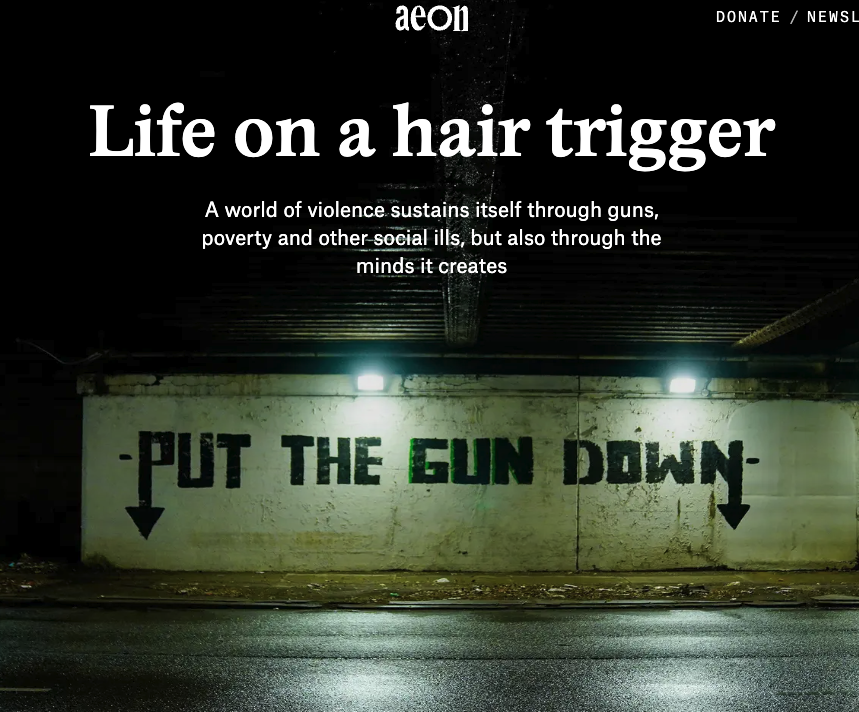
Aeon - Life on a hair trigger
-
![]()
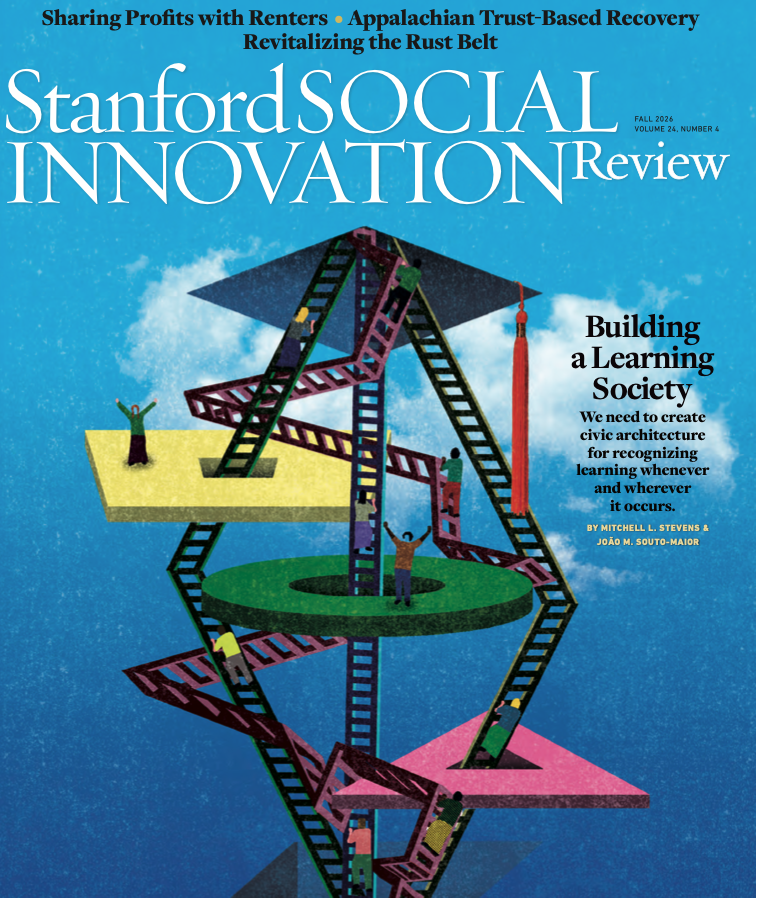
The Hidden Logic of Gun Violence
-
![]()
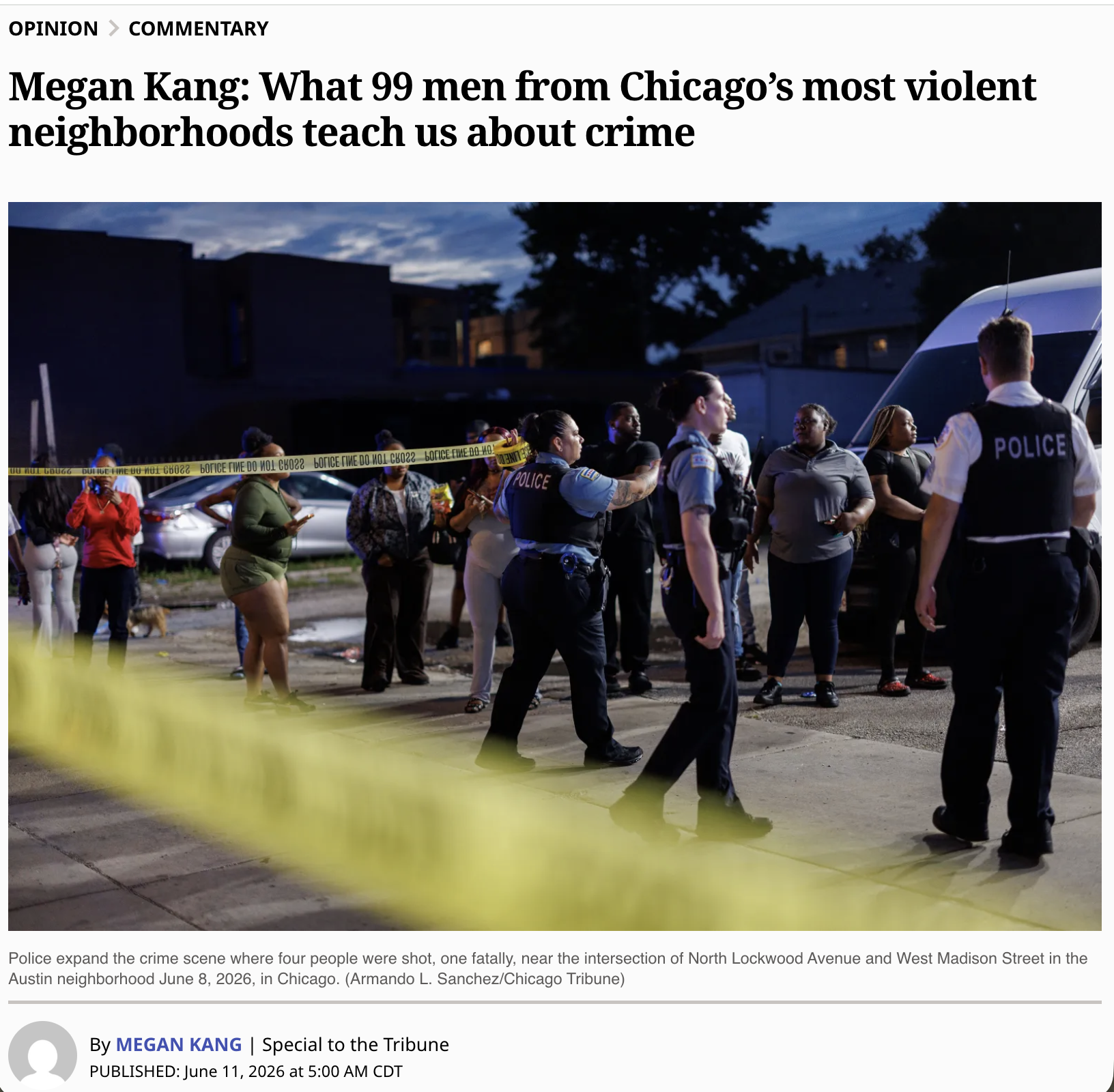
Chicago Tribune - On Violence and Cognition
-
![Policy Report]()
Policy Report
-
![]()
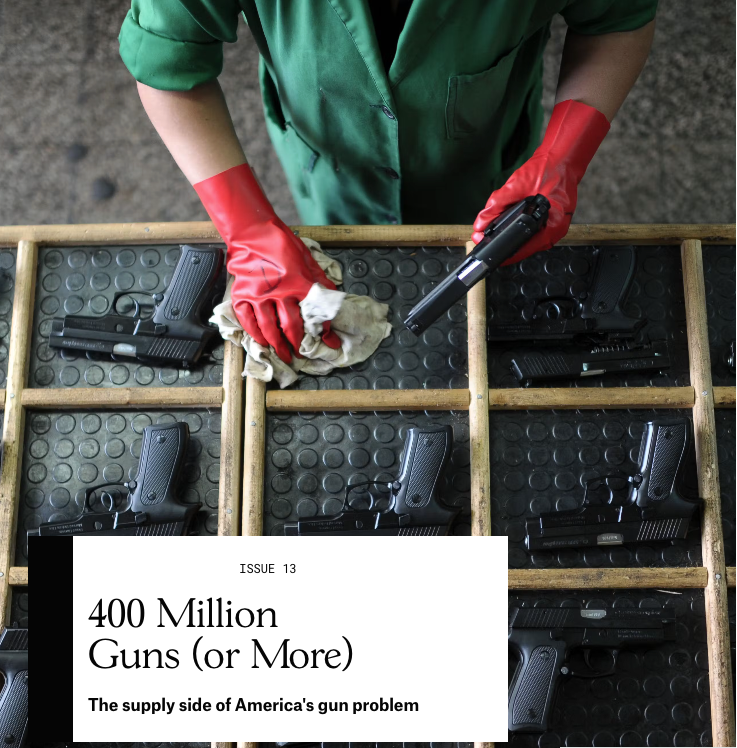
Vital City - 400 Million Guns (or More)
-
![]()
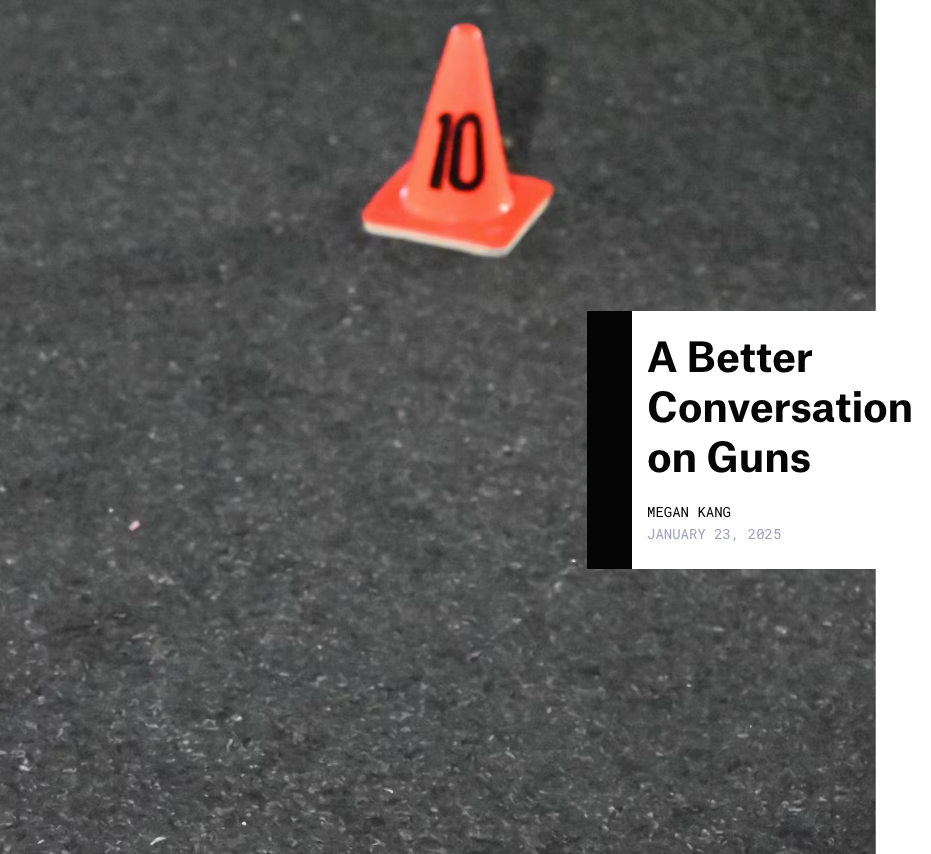
Vital City - A better conversation on guns
-
![]()
Aeon - Why America fell for guns
-
![]()
Vital City - American gun culture
-
![]()
NYTimes - Guns laws and gun deaths
-
![Teach Your Kids - On gun violence and schools]()
Teach Your Kids - On gun violence and schools
-
![]()
Ethnographic Marginalia - On violence
-
![]()
HuffPost - Stop the Steal
-
![]()
Asian America - MAGA minds








Museum of Contemporary Art, Detroit, 2015

Back of the bus in Chinatown, San Francisco, 2012

Mexican ranchero, San Agustin, 2012

Nara, Los Angeles, 2014

Chicago Skyline, 2023

On the sidelines, Manila, 2010